Key Takeaways
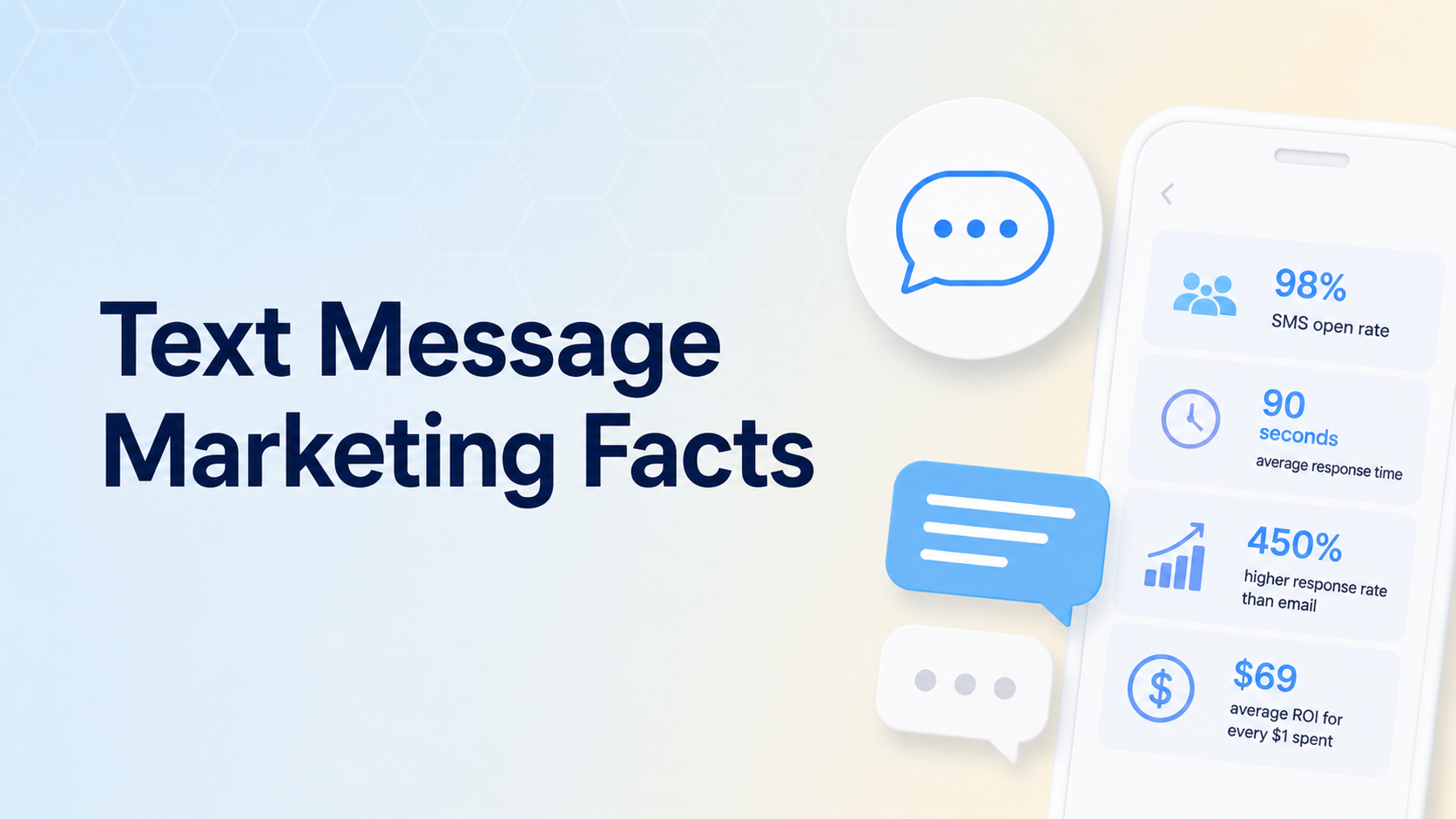
- Recruiting has shifted to SMS faster than almost any industry. Candidates respond to texts at multiples of their email response rate, especially for active roles and time-sensitive interview coordination
- The wrong SMS platform turns this advantage into chaos. Recruiters texting from personal phones means no shared visibility across the agency, conversations lost when a recruiter leaves, and no audit trail when a candidate raises a complaint
- A real SMS platform for recruiting agencies supports mass outreach to candidate databases, two-way conversations for active candidates, per-recruiter or shared agency numbers, integration with the ATS or CRM, and AI-powered pre-screening for high-volume roles
- Sakari is the strongest choice for recruiting agencies because it handles candidate outreach, interview coordination, client communication, and AI-driven candidate pre-screening on a single platform, with native CRM integrations and connections to 1,300+ tools via Zapier
- Mass text capabilities matter more in recruiting than in most industries. Sending a single role announcement to 500 past candidates is a daily or weekly activity for high-volume agencies, and many SMS platforms throttle or fragment at that scale
- AI pre-screening is one of the highest-leverage applications of SMS in recruiting. AI can ask qualifying questions about location, availability, and experience, then route only qualified candidates to a recruiter
- E-commerce-first platforms (Klaviyo, Emotive) aren't built for recruiting workflows. Their data models assume shoppers, not candidates moving through pipeline stages
- The seven platforms compared: Sakari, Emotive, SimpleTexting, SlickText, EZ Texting, Klaviyo, TextMagic
Recruiting Already Runs on Text Messages. Most of It Runs on Personal Phones.
Walk into any staffing agency and you'll find SMS happening at scale. Recruiters texting candidates between interviews. Operations staff coordinating with placed contractors. Account managers chasing clients on open requisitions. The activity is real, and it's working better than email by a wide margin.
The problem isn't whether recruiting agencies should use SMS. They already do. The problem is how. Most of it runs on personal phones, with no shared visibility, no record on the candidate profile, and no continuity when a recruiter leaves the agency taking their conversation history with them. A candidate who texts back two months later about a new role lands in a personal inbox the agency no longer has access to.
This guide compares seven SMS platforms through the recruiting and staffing lens. Whether you run a high-volume light industrial staffing firm, an executive search practice, a healthcare staffing operation placing travel nurses, an IT staffing agency, or an internal corporate talent acquisition team, the criteria are similar. The platform has to fit how recruiting actually works.
What Recruiting Agencies Need From an SMS Platform
The criteria that separate a real recruiting SMS tool from a marketing platform with two-way replies turned on.
Mass Texting for Candidate Database Activation
A staffing agency's biggest asset is its candidate database. Reactivating past candidates for new roles, alerting available candidates to urgent fills, and running database refresh campaigns all depend on mass texting capability. The send needs to handle hundreds or thousands of candidates per campaign, with merge field personalization so each candidate sees their name, the specific role, and a relevant call to action.
Mass texting at this scale separates platforms built for real recruiting volume from platforms that throttle past a few hundred recipients per send.
Two-Way Conversations Through a Shared Inbox
Candidate conversations are the heart of recruiting. The platform needs a shared inbox where every recruiter in the agency can see the conversation history with any candidate, leave internal notes, and pick up each other's threads when someone is out. Without this, conversations live on personal phones and the agency operates without institutional memory.
Two-way conversation handling with assignment, internal notes, and conversation history is the operational baseline for recruiting SMS.
ATS or CRM Integration
Most recruiting agencies run on an ATS (Bullhorn, JobAdder, Loxo, Vincere, Recruiterflow, and others). Some use a general CRM (HubSpot, Pipedrive) as their candidate and client database, especially smaller agencies or executive search firms.
The SMS platform needs to connect to whatever system holds the candidate records. The best integrations sync candidate data both ways and let SMS workflows fire based on ATS events (candidate added to a job, candidate moved to interview stage, candidate placed). Direct native integrations work fastest, and Zapier connections cover the rest of the ATS market when native isn't available.
Per-Recruiter or Shared Agency Numbers
Some agencies want each recruiter to have a unique phone number that travels with them, creating personal continuity with candidates and clients. Other agencies prefer a single agency number with conversation routing to the right recruiter based on candidate ownership or workload. The right platform supports both models depending on the agency's structure and the recruiter's relationship style.
AI Pre-Screening for High-Volume Roles
For agencies running high-volume hiring (light industrial, hospitality, healthcare staffing, customer service roles), AI-powered pre-screening is one of the highest-leverage applications of SMS. Sakari AI can send candidates a sequence of qualifying questions (location, availability, hourly rate, certifications, willingness to travel), parse the responses, and route only qualified candidates to a recruiter for the next step.
This shifts recruiter time from screening to closing. A candidate who has already confirmed location, availability, and rate is meaningfully further along than one who needs all that gathered in the first call.
Templates for Common Recruiting Scenarios
Recruiters send the same messages many times per day: initial candidate outreach, interview confirmations, post-interview check-ins, offer extensions, placement coordination, day-one welcomes. Template libraries with merge fields keep messaging consistent across recruiters while preserving personalization.
Templates also help with onboarding new recruiters. A junior recruiter can hit the ground running with proven message patterns instead of figuring out what to say in their first week.
Mobile App for Recruiters in the Field
Recruiters at job fairs, on-site visits, and client meetings need full SMS access from their phones. Mobile app access is structural to the recruiting workflow because recruiters are rarely at a desk for extended periods. The platform should give recruiters full inbox, send, and template access from a real mobile app, not a stripped-down web view.
Manager Visibility and Reporting
Agency owners and recruiting managers need visibility into recruiter SMS activity. Not for surveillance, but for coaching (which templates produce the best response rates), compliance (catching issues before they scale), and consistency (promoting top-performing patterns across the team). The platform should report send volume, reply rates, and response times by recruiter.
International Messaging for Global Staffing
Healthcare staffing firms placing international nurses, IT staffing operations sourcing globally, and corporate talent acquisition teams hiring across multiple countries all need international SMS coverage. Local sender numbers in major markets, alphanumeric sender IDs where required, and time-zone-aware scheduling make international recruiting SMS actually work instead of just technically possible.
Compliance Handling
TCPA applies to recruiting SMS as much as to consumer marketing. Opt-in is required. Opt-out enforcement has to be automatic. Some states have additional requirements. The platform supports compliance work with proper opt-in capture, STOP keyword recognition, and audit trails. The agency owns the compliance content, but the platform's infrastructure has to make compliance possible.
The 7 Best SMS Tools for Recruiting and Staffing Agencies
1. Sakari
Sakari is built for businesses that need SMS to do real operational work, which fits recruiting almost perfectly. The platform handles candidate database outreach through mass texting, ongoing candidate conversations through a shared inbox, automated workflow sequences for candidate journeys, and AI-powered pre-screening through Sakari AI.
The integration layer is where agencies get the most leverage. Native integrations with HubSpot, Pipedrive, ActiveCampaign, Intercom, Slack, and 1,300+ tools through Zapier cover most ATS platforms and CRMs that agencies actually use. Candidate data syncs from the system of record. SMS workflows fire from ATS events. Conversation history writes back to the candidate profile.
The shared inbox supports multi-recruiter agency workflows with conversation assignment, internal notes, and full history. When a recruiter leaves, the conversations stay with the agency. When a candidate replies two months later about a new role, the next recruiter who picks up the thread has the full context.
The mobile app gives recruiters at job fairs, on-site visits, and client meetings full access from anywhere. Templates with merge fields keep messages consistent across the team. International coverage (200+ countries with local sender numbers in major markets) handles global staffing operations on the same platform as domestic.
What It's Good At For Recruiting Agencies:
- Mass texting for candidate database campaigns and reactivation
- Two-way conversations through a shared inbox with assignment and internal notes
- AI-powered candidate pre-screening with Sakari AI
- Automated workflows tied to candidates
- Native CRM integrations (HubSpot, Pipedrive, ActiveCampaign) and 1,300+ tool connections via Zapier
- Per-recruiter or shared agency number models
- Templates with merge fields for common recruiting scenarios
- Mobile app for recruiters in the field
- International messaging for global staffing operations (200+ countries)
- MMS support in US and Canada for visual content (job postings, location maps)
Best For: Light industrial and high-volume staffing firms, healthcare staffing (travel nurses, allied health), IT and engineering staffing, executive search firms, hospitality staffing, RPO providers, internal corporate talent acquisition teams, and any recruiting operation that wants SMS to function as a real agency-wide channel.
2. SimpleTexting
SimpleTexting works for small recruiting operations with straightforward needs. The interface is approachable, two-way messaging functions adequately, and basic mass texting handles modest candidate database sizes.
The depth doesn't extend to recruiting-specific workflows. AI pre-screening, deep ATS integration, advanced workflow automation for candidate journeys, and high-volume mass sending all push the platform's limits. Solo recruiters and 2-3 person agencies can use it. Larger operations outgrow it.
What It's Good At:
- Basic two-way messaging
- Approachable interface for solo recruiters
- Moderate-volume mass texting
Best For: Solo recruiters or very small agencies with simple SMS needs.
3. SlickText
SlickText centers on keyword opt-in campaigns and SMS marketing list growth, which fits a narrow recruiting use case: capturing candidate interest from job fairs, conferences, or print advertising. A prospective candidate texts a keyword to opt into job alerts, and the contact lands in the platform.
Beyond that lead capture pattern, SlickText isn't designed for ongoing candidate conversations, ATS integration, or the operational features that recruiting agencies need.
What It's Good At:
- Keyword-driven candidate opt-in capture
- SMS list growth from offline campaigns
- Basic mass texting
Best For: Recruiting agencies capturing candidate interest from offline campaigns. Not a full agency platform.
4. EZ Texting
EZ Texting offers a beginner-friendly entry into SMS. For a solo recruiter or a small agency sending occasional candidate updates, the platform works at the basics.
Recruiting agency workflows beyond solo use aren't supported. No real shared inbox, limited automation, basic integration. Most growing agencies move to a more capable platform within a year.
What It's Good At:
- Beginner-friendly setup
- Simple sending for individual recruiters
Best For: Solo recruiters or very small agencies sending occasional, simple updates.
5. Klaviyo
Klaviyo is built for e-commerce, with deep Shopify integration. The data model assumes shoppers and orders, which doesn't fit recruiting at all. There are no concepts of candidates, jobs, placements, or pipeline stages in the Klaviyo model. ATS integration isn't supported.
For recruiting agencies, Klaviyo is the wrong tool entirely.
What It's Good At:
- E-commerce SMS and email marketing
- Shopify integration
Best For: E-commerce brands. Not a fit for recruiting agencies.
6. Emotive
Emotive is built for DTC e-commerce on Shopify and Magento. Recruiting isn't a use case the platform was designed around. No ATS integration, no candidate workflow model, no operational features for recruiting agencies.
For recruiting, Emotive isn't a fit.
What It's Good At:
- E-commerce SMS marketing in US and Canada
Best For: DTC e-commerce brands. Not a fit for recruiting agencies.
7. TextMagic
TextMagic supports basic two-way SMS. For a solo recruiter sending very low-volume candidate messages without ATS integration needs, the platform handles the simplest use cases.
Recruiting agency workflows beyond a solo operator aren't supported. No real shared inbox, no candidate workflow automation, no native ATS or CRM integration, no AI pre-screening.
What It's Good At:
- Simple, low-volume sending
- Pay-as-you-go pricing for occasional use
Best For: Solo recruiters with minimal volume and no integration requirements.
How Different Recruiting Operations Use SMS
The mechanics shift based on the type of recruiting and the volume.
High-Volume Light Industrial Staffing
Light industrial staffing firms (warehouse, manufacturing, logistics, food service) move hundreds or thousands of candidates per month. SMS is the operational backbone. Use cases include initial candidate outreach for open shifts, AI pre-screening for location and availability, interview scheduling, day-of reminders for new placements, and ongoing communication with active contractors about shift changes and pay periods.
AI pre-screening is the biggest leverage point. A staffing firm running 50 open warehouse roles can have AI text candidates with qualifying questions and route only those who confirm location, shift availability, and rate to a human recruiter. The recruiter focuses on closing, not screening.
Healthcare Staffing and Travel Nursing
Healthcare staffing firms placing travel nurses, allied health professionals, and per-diem clinicians have heavy SMS workflows. Candidates respond to texts but rarely answer phones. The use cases include role outreach with specific assignment details (location, pay rate, duration, start date), credential reminders, contract follow-up, and on-assignment check-ins.
The international angle matters for healthcare staffing firms recruiting clinicians from outside the US. Local sender numbers in candidate home countries during the recruitment phase, then US numbers after the candidate relocates.
IT and Engineering Staffing
IT and engineering staffing has lower volume but longer engagement cycles. Candidates often have multiple recruiters reaching out for the same role, and response speed determines who gets the first conversation. The SMS pattern here is closer to B2B sales: personalized outreach with deal-relevant context, quick follow-up after initial response, interview coordination, and post-interview nudges.
CRM or ATS integration matters more here than almost anywhere else because the candidate relationships are long-term and span multiple roles over years.
Executive Search
Executive search firms work with much smaller candidate pools but at much higher engagement intensity. SMS is used sparingly and intentionally: meeting confirmations, scheduling around the candidate's tight calendar, post-interview check-ins. The tone is more formal, the volume is lower, and the personalization needs to feel handcrafted rather than templated.
For executive search, the SMS platform's role is providing the operational continuity and CRM integration rather than the high-volume features that high-volume staffing needs.
Internal Corporate Talent Acquisition
In-house TA teams use SMS for inbound candidate communication, interview scheduling, offer extensions, and onboarding coordination. The volume varies by company size and hiring tempo. The integration with the corporate ATS (Greenhouse, Lever, Workday, iCIMS, SmartRecruiters) matters because the candidate data and pipeline stages live there.
For corporate TA teams running on platforms without a native Sakari integration, Zapier connections cover most of the workflow needs.
Hospitality and Retail Staffing
Hospitality staffing (restaurants, hotels, event staffing) and retail staffing share characteristics with light industrial: high volume, time-sensitive role fills, hourly workers who respond to SMS but not email. AI pre-screening, shift confirmation workflows, and mass texting for urgent fills are the core patterns.
Recruitment Process Outsourcing (RPO)
RPO providers running embedded recruiting for enterprise clients face complex operational requirements. They often manage multiple client brands from a single agency platform, each with different employer branding, different ATS systems, and different communication patterns. Multi-client support, per-client number assignment, and integration across multiple ATS systems matter more here than in standalone agency work.
International Staffing
Staffing firms operating across multiple countries face the broader international SMS challenges (local sender numbers, country-specific compliance, time zone handling, language) on top of the recruiting-specific requirements. Coverage in target candidate countries is non-negotiable.
Common Mistakes Recruiting Agencies Make With SMS
A few patterns repeat:
- Letting recruiters text candidates from personal phones, which destroys continuity when staff turns over
- Skipping ATS or CRM integration and managing SMS as a separate system from the candidate database
- Treating mass candidate outreach as a one-time blast rather than a segmented, personalized campaign
- Forgetting opt-in capture, leaving the agency exposed to TCPA complaints
- Not setting up STOP keyword handling, allowing unsubscribes to fail silently
- Using the same template across every role without role-specific personalization
- Failing to handle reply traffic, leaving inbound candidate questions in an unmonitored inbox
- Skipping AI pre-screening for high-volume roles, burning recruiter time on candidates who won't qualify
- Mixing candidate communication and client communication through the same number, creating both noise and compliance risk
- Not giving managers visibility into recruiter SMS activity, missing coaching and consistency opportunities
- Choosing a marketing-first SMS platform for recruiting workflows and outgrowing it within a year
The Takeaway
The best SMS tool for recruiting and staffing agencies is the one built for the operational realities of agency work. Mass candidate outreach, two-way conversations through a shared inbox, ATS or CRM integration, AI pre-screening for high-volume roles, mobile access for recruiters in the field, and manager visibility into team activity.
For most recruiting and staffing agencies, that's Sakari.
Start a free Sakari trial and connect it to your ATS or CRM. Run a candidate database campaign or set up AI pre-screening for one open role before rolling out to the full agency.
FAQs
What Is the Best SMS Tool for Recruiting and Staffing Agencies in 2026?
Sakari is the strongest all-around choice for recruiting and staffing agencies. It supports mass candidate outreach, two-way conversations through a shared inbox, AI-powered pre-screening, automated workflows for candidate journeys, native CRM integrations, and 1,300+ tool connections via Zapier that cover most ATS systems. For solo recruiters with very simple needs, simpler platforms can work, but most growing agencies need the full Sakari capability.
How Does SMS Compare to Email for Candidate Outreach?
Candidate response rates on SMS typically run several times higher than email, especially for active job seekers and time-sensitive interview coordination. The trade-off is that SMS works best for short, contextual messages, not long-form pitches. The strongest agencies use both: email for substance (detailed job descriptions, contracts, offer letters), SMS for moments where speed and visibility matter (initial outreach, interview confirmations, urgent fills).
Can SMS Integrate With My ATS?
Yes, through native CRM integrations, Zapier, or direct API. Sakari integrates natively with HubSpot, Pipedrive, ActiveCampaign, and Intercom, which serve as CRMs for many smaller agencies and executive search firms. For larger agencies running ATS platforms like Bullhorn, JobAdder, Vincere, Loxo, or Recruiterflow, Zapier connections cover most workflow needs. Custom API integration is available for agencies with specific requirements.
How Does AI Pre-Screening Work in SMS?
AI pre-screening sends candidates a sequence of qualifying questions about location, availability, experience, certifications, and rate, then parses the responses and routes only qualified candidates to a recruiter. For high-volume roles (warehouse, hospitality, healthcare, customer service), this can save recruiters hours per day on screening calls. Sakari AI handles this layer inside the platform without requiring a separate AI tool.
Should Each Recruiter Have Their Own Phone Number?
It depends on the agency structure. Recruiters with long-term candidate relationships often benefit from per-recruiter numbers, because candidates associate the number with the specific recruiter and continuity matters. High-volume staffing operations often prefer shared agency numbers with conversation routing to the right recruiter, because candidate ownership rotates and the agency identity matters more than the individual recruiter. The right platform supports both models.
Is Recruiting SMS Subject to TCPA?
Yes. TCPA applies to SMS for recruiting purposes. Opt-in is required, STOP keyword handling has to be automatic, and the agency needs to maintain proper records of consent. The platform supports compliance work with opt-in capture, STOP processing, and audit trails. The agency owns the compliance content. Talk to legal counsel about your specific recruiting SMS practices before scaling.
How Do Staffing Firms Use SMS for Contractor Communication?
Beyond candidate recruitment, staffing firms use SMS for ongoing communication with placed contractors: shift confirmations, schedule changes, time sheet reminders, pay period notifications, urgent fills for open shifts, end-of-assignment check-ins, and reactivation for new assignments. The same platform can handle both candidate recruitment and contractor management.
Can Recruiting Agencies Use SMS for Client Communication Too?
Yes. The same platform supports SMS to hiring managers and clients for requisition updates, candidate submission alerts, interview confirmations, and placement coordination. Many agencies run separate templates and workflows for the candidate side versus the client side, with both running through the same shared inbox or with separate numbers for clarity.
Note: Competitor information in this article reflects publicly available data at the time of writing. SMS platforms update their features, pricing, and integrations frequently, so we recommend verifying current details directly with each vendor before making a final decision.